Wallnora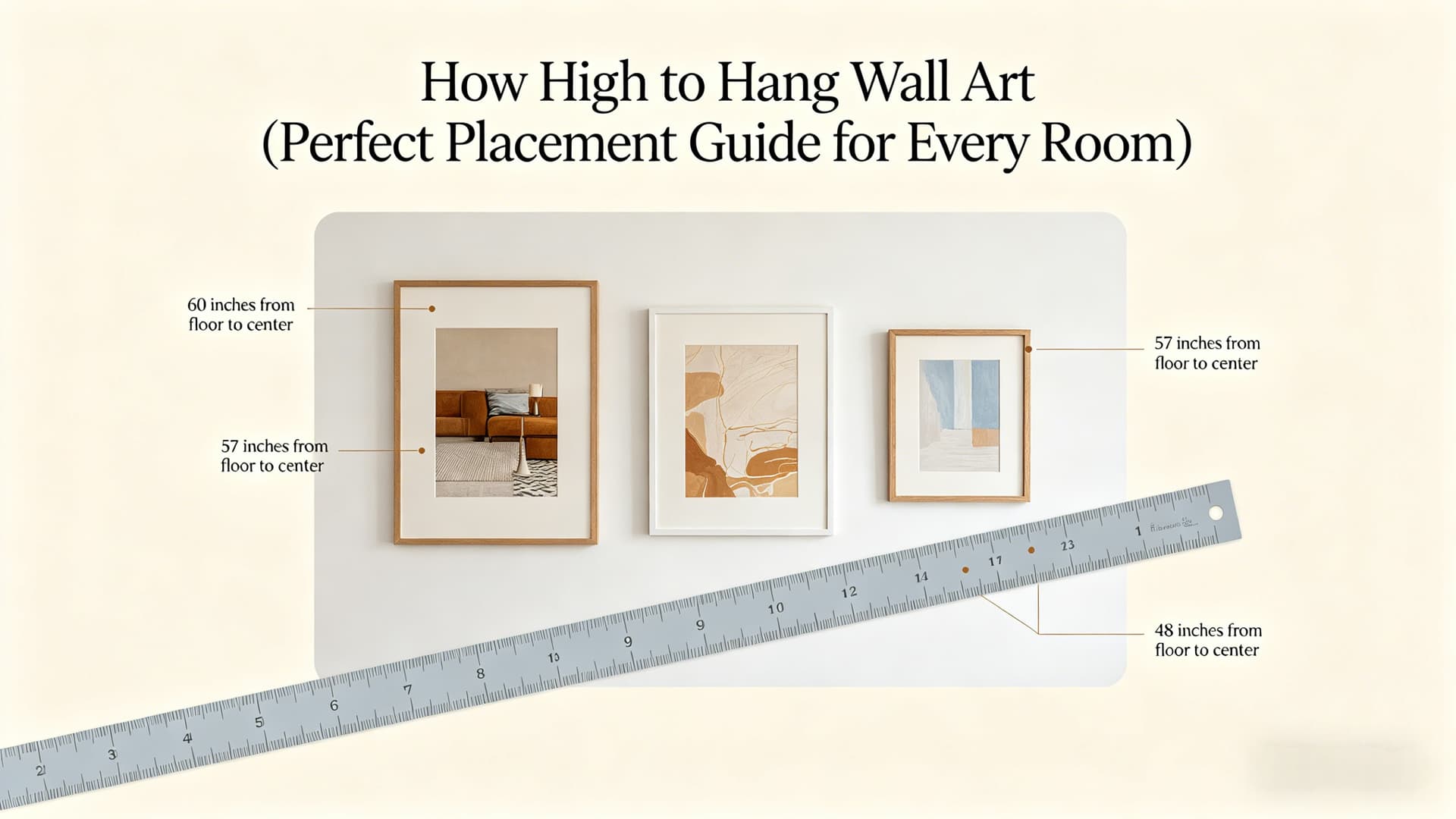
Getting the height right is the difference between a room that feels professionally designed—and one that feels “off.”
Hang your art too high, and it looks disconnected. Too low, and it feels cramped.
The good news? There’s a simple rule designers use everywhere.
Quick Answer: How High to Hang Wall Art?
👉 The standard rule is:
- Hang wall art so the center sits 57–60 inches (145–152 cm) from the floor
This is known as eye-level height, and it works because it aligns with the average human line of sight.
👉 If you're hanging art above furniture:
- Place it 6–10 inches (15–25 cm) above the furniture
These two rules cover about 90% of situations.
What Is the 57-Inch Rule (And Why It Works)
The 57-inch rule comes from art galleries and museums.
It ensures that:
-
The artwork is immediately visible
-
The composition feels balanced
-
Viewers don’t have to look up or down awkwardly
But here’s what most guides don’t tell you:
👉 It’s a guideline—not a strict rule.
When to adjust it:
- Tall ceilings (9ft+)
→ You can go slightly higher for visual balance
- Very large artwork
→ Center may shift slightly upward
- Rooms where people sit (living rooms)
→ Slightly lower often feels better
How High to Hang Wall Art Above Furniture
This is where most people make mistakes.
Instead of using the 57-inch rule, you should anchor the art to the furniture.
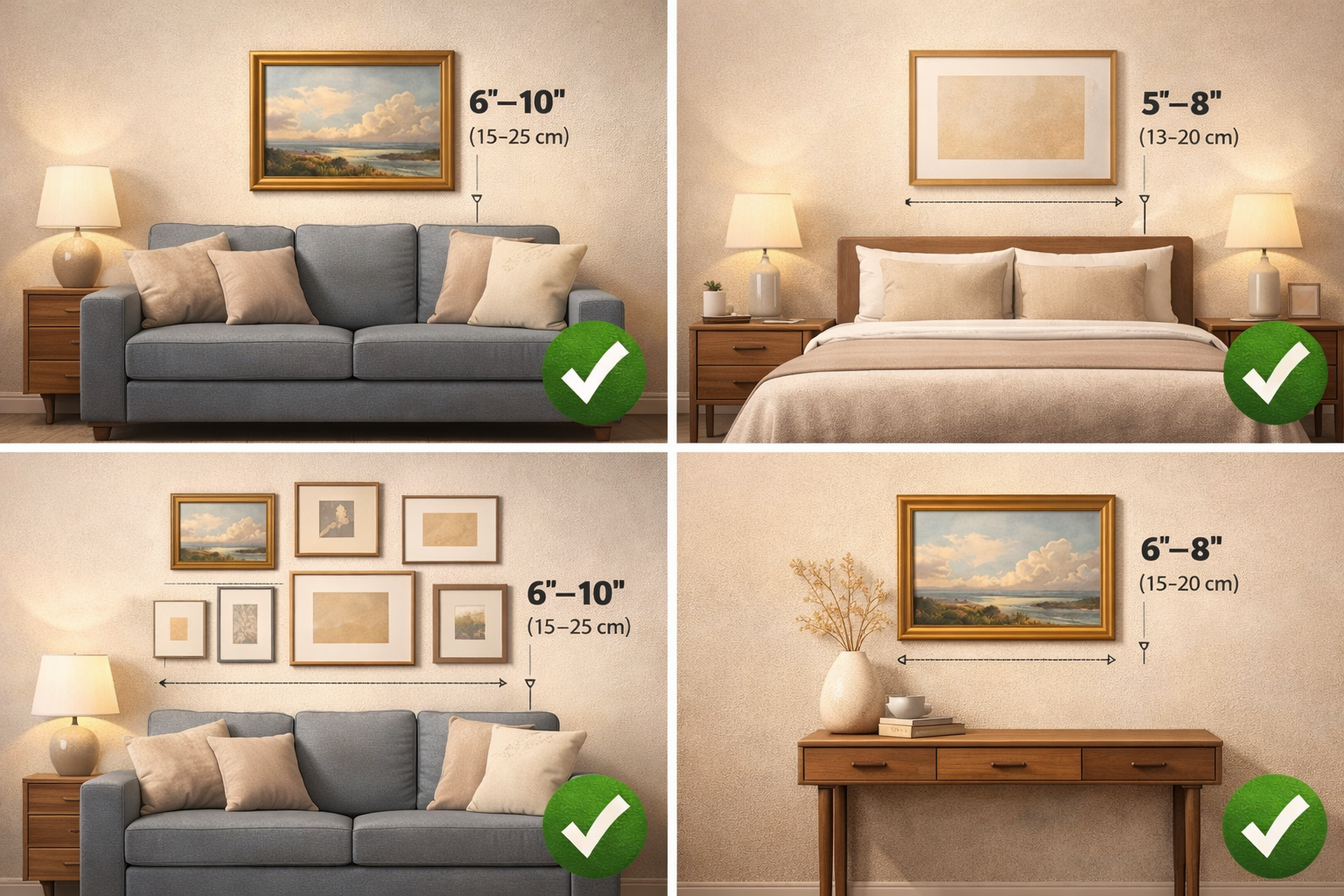
✔️ Above a Sofa
-
Hang art 6–10 inches above the sofa
-
Artwork width should be about 2/3 of the sofa width
✔️ Above a Bed
-
Place art 5–8 inches above the headboard
-
Avoid hanging too high—it breaks visual connection
✔️ Above a Console Table or Dresser
-
Keep it 6–8 inches above
-
Use slightly smaller spacing for a tighter look
👉 Key principle: Art should feel connected to the furniture, not floating above it
How High to Hang Wall Art in Different Rooms
Different spaces = different visual behavior.
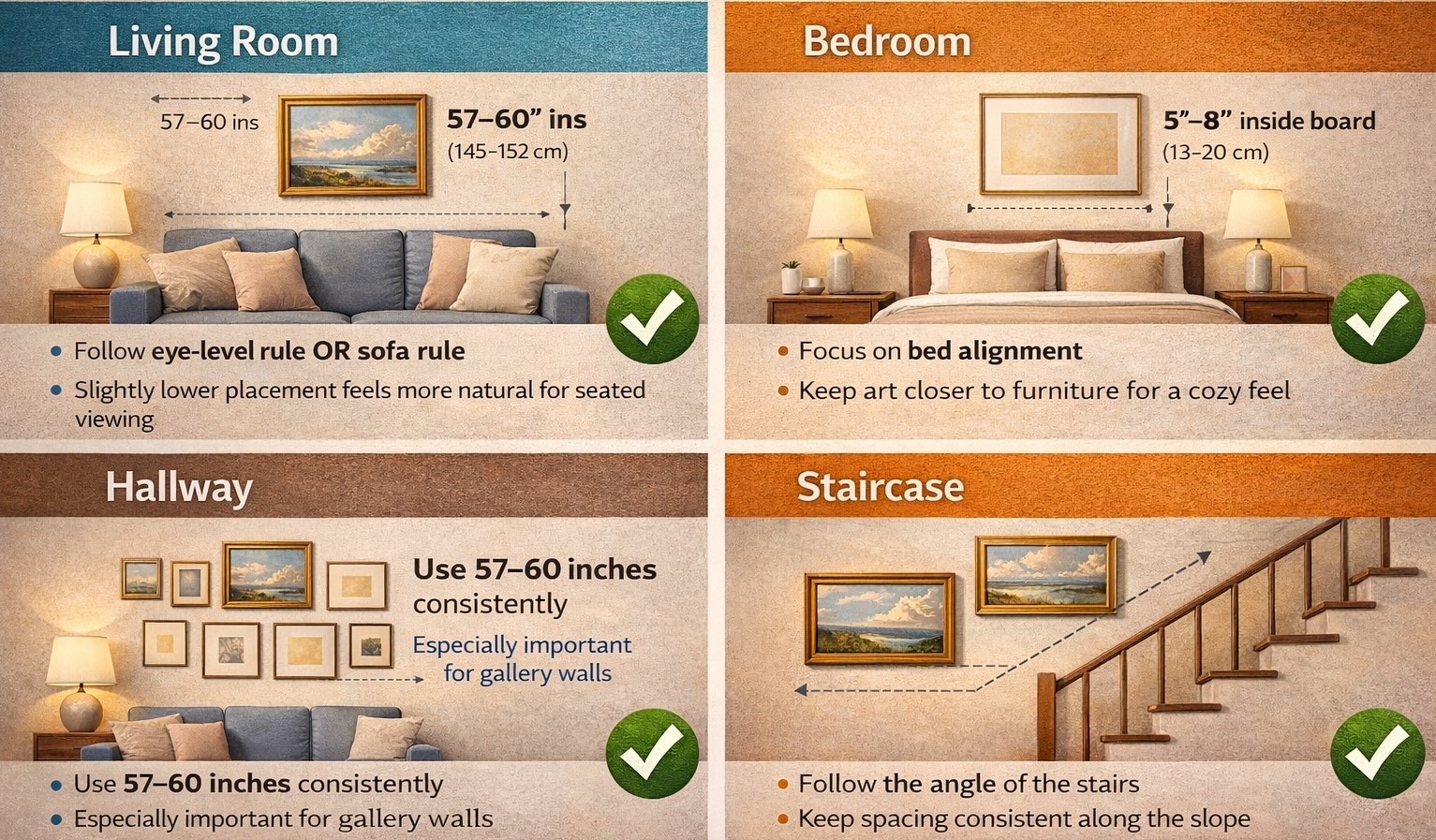
Living Room
-
Follow eye-level rule OR sofa rule
-
Slightly lower placement feels more natural for seated viewing
Bedroom
-
Focus on bed alignment
-
Keep art closer to furniture for a cozy feel
Hallway
-
Use 57–60 inches consistently
-
Especially important for gallery walls
Staircase
-
Follow the angle of the stairs
-
Keep spacing consistent along the slope
Common Mistakes When Hanging Wall Art
Avoid these and you’re already ahead of most people:
❌ Hanging art too high
This is the #1 mistake. 👉 If you have to tilt your head up—it’s too high.
❌ Ignoring furniture alignment
Art should relate to what’s below it.
❌ Using artwork that’s too small
Small frames on large walls feel lost.
❌ Uneven spacing in gallery walls
Inconsistent gaps break visual harmony.
Pro Tip: Plan Your Layout Before You Hang
Here’s something most people learn the hard way:
👉 Once you make holes in the wall, there’s no easy fix.
That’s why it’s worth planning first.
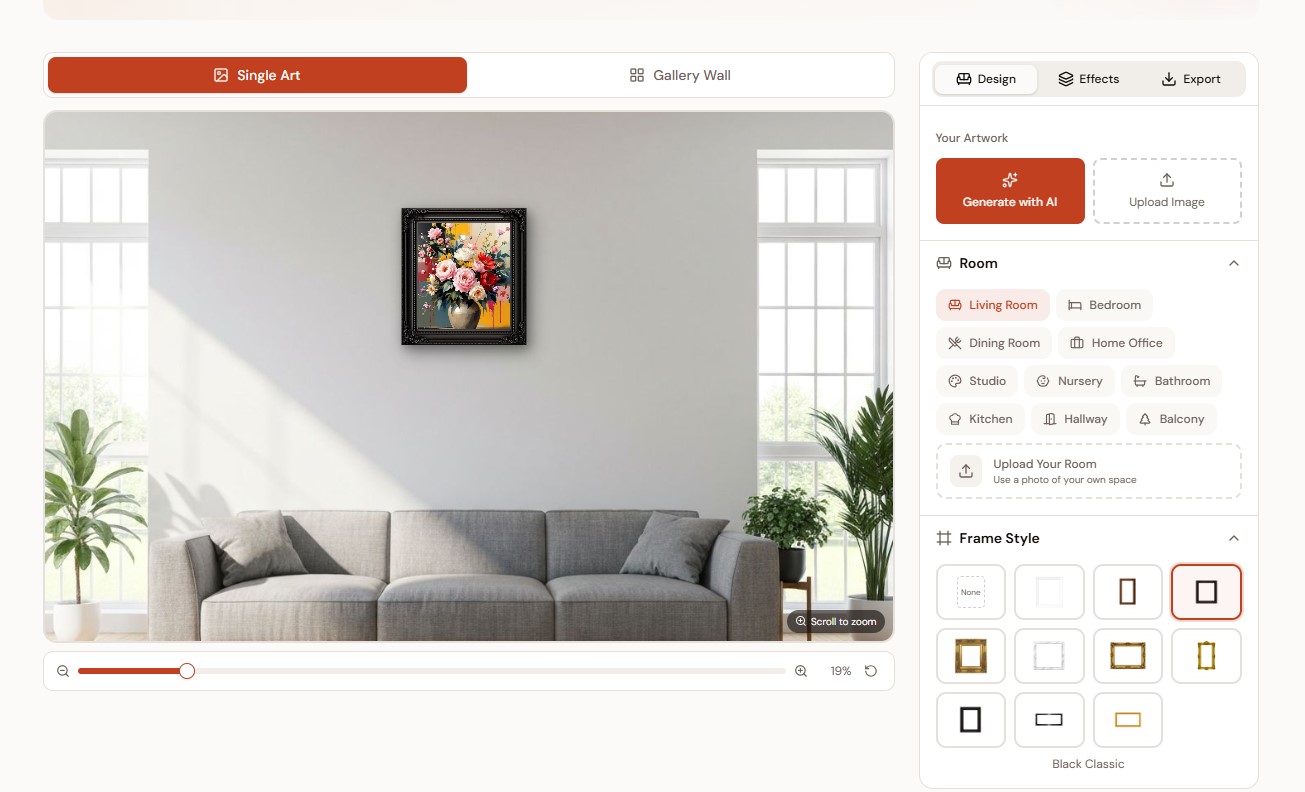
Tools like Wallnora let you:
-
Preview your wall layout
-
Adjust height and spacing visually
-
Avoid unnecessary holes and rework
👉 Especially useful if you're creating a gallery wall or working with multiple frames.
FAQ: How High to Hang Wall Art
How high should wall art be from the floor?
The center of the artwork should typically be 57–60 inches from the floor, which aligns with average eye level.
How high should you hang art above a couch?
Art should be placed 6–10 inches above the couch to create a balanced and connected look.
Is it okay to hang wall art higher than eye level?
Yes, but only in specific cases such as:
-
Very large artwork
-
Rooms with high ceilings
Otherwise, it can feel disconnected.
How high should a gallery wall be?
The center of the entire gallery should align with 57–60 inches from the floor, not each individual frame.
What is the biggest mistake when hanging wall art?
Hanging art too high is the most common mistake. It disrupts visual balance and makes the space feel incomplete.
Final Thoughts
There’s no single “perfect” height—but there is a perfect balance.
If you follow these principles:
-
Use the 57-inch rule as your baseline
-
Adjust based on furniture and room type
-
Keep spacing consistent and intentional
👉 Your wall art will look naturally balanced—without second guessing.