Wallnora
Hanging art on a concrete wall isn’t the same as drywall or plaster.
It’s harder—literally.
Concrete is dense, unforgiving, and once you make a mistake, it’s not easy to fix. A wrong drill hole, a loose anchor, or a failed adhesive strip can leave permanent marks or even damage your wall.
But the good news is: If you use the right method, you can hang art on concrete walls securely, cleanly, and without unnecessary damage.
This guide walks you through:
-
When you should drill (and when you shouldn’t)
-
The exact tools that actually work on concrete
-
Step-by-step instructions (with pro tips most guides skip)
-
No-drill alternatives that won’t fall off overnight
Can You Hang Art on a Concrete Wall Without Drilling?
Yes—but only under certain conditions.
If your artwork is lightweight (under 5 lbs / ~2.3 kg), you can use:
-
Adhesive hooks
-
Mounting strips
-
Putty-based solutions
However, concrete surfaces are often:
-
Dusty
-
Slightly textured
-
Less adhesive-friendly than painted drywall
👉 Which means: Even “strong” adhesive solutions can fail if not applied correctly.
Rule of thumb:
-
Light art → no drilling is possible
-
Medium to heavy art → drilling is the only reliable solution
What Is the Best Way to Hang Art on Concrete Walls?
It depends on weight and permanence.
✔️ Best methods by scenario:
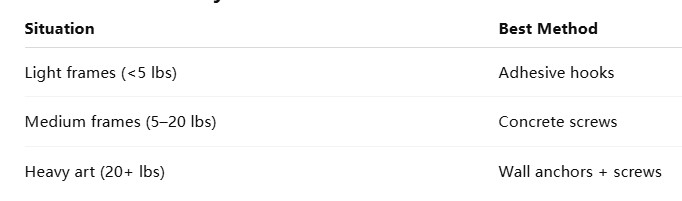
Concrete doesn’t “forgive” weak mounting.
What Tools Do You Need for Concrete Wall Hanging?
To do this properly, you need more than just a basic drill.
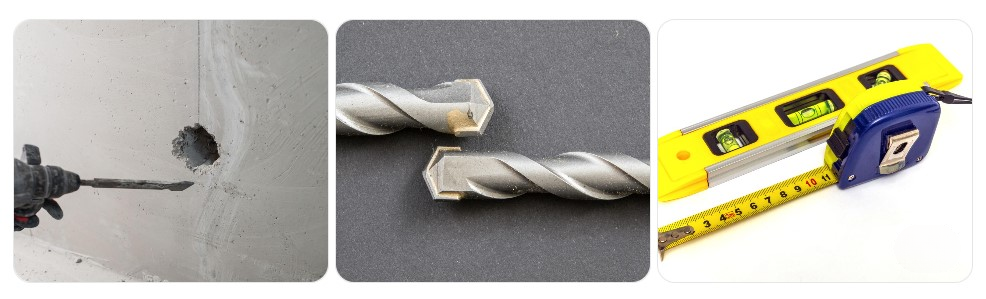
Essential tools:
- Hammer drill
Regular drills struggle with concrete. A hammer drill adds impact force.
- Masonry drill bits
Standard bits won’t penetrate concrete effectively.
- Wall anchors or concrete screws
These create a secure hold inside dense material.
- Level + measuring tape
Once you drill, there’s no easy redo.
How to Hang Art on Concrete Wall (Step-by-Step Guide)
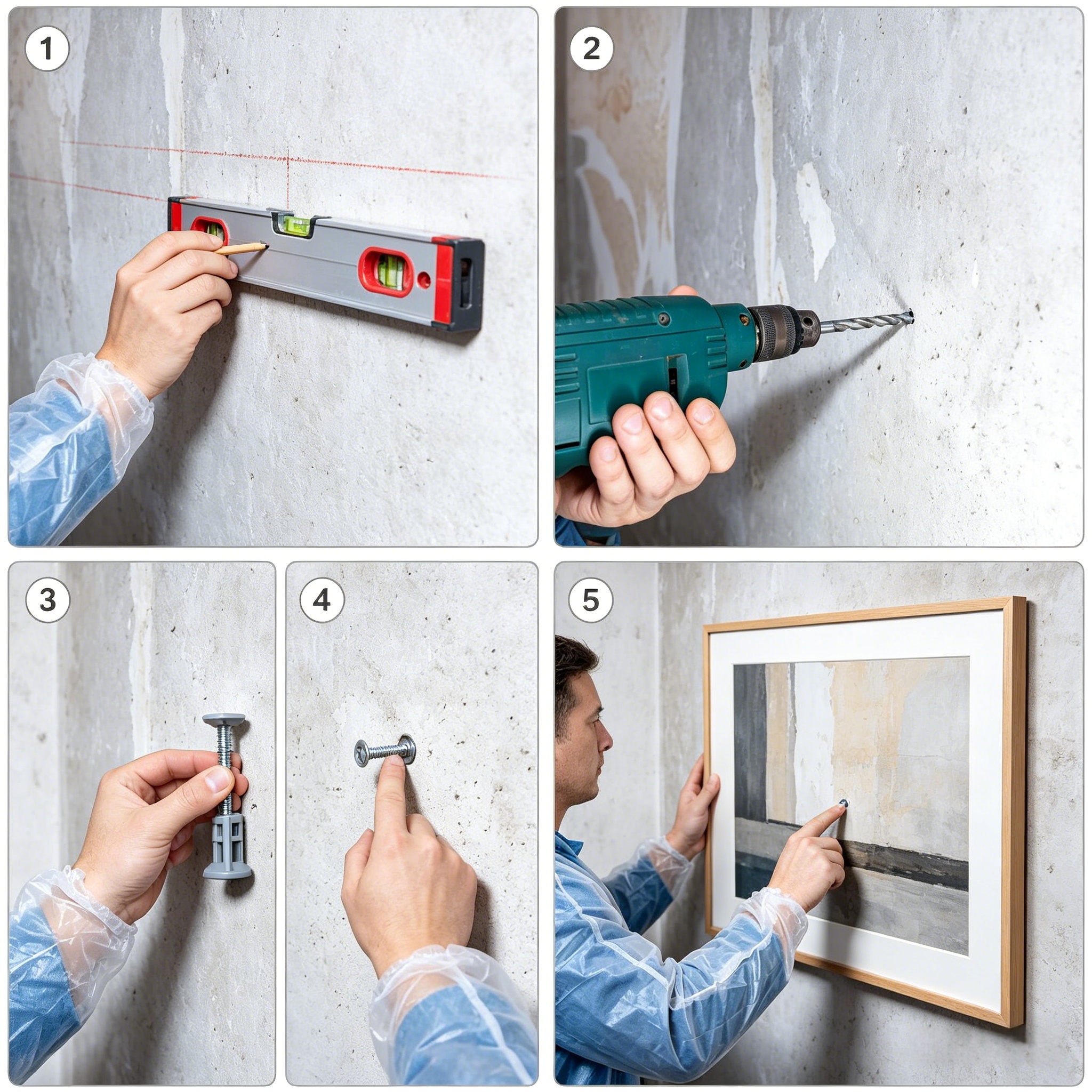
Step 1: Mark Your Placement Carefully
Don’t rush this.
Concrete is not a surface where you can “adjust later.” Use a level and mark exact points with a pencil.
👉 Pro tip: Put painter’s tape on the wall before marking—it prevents drill slipping.
Step 2: Start Drilling Slowly
This is where most beginners mess up.
-
Start at low speed
-
Let the bit “bite” into the surface
-
Then gradually increase speed
If you go full speed immediately, the bit can:
-
Slide
-
Scratch the wall
-
Ruin your alignment
Step 3: Drill to the Correct Depth
Your hole should match:
- The length of your anchor or screw
Too shallow → won’t hold Too deep → weak grip
👉 A simple trick: Wrap tape around the drill bit to mark depth.
Step 4: Insert Anchor or Screw
-
Tap anchors gently with a hammer
-
Don’t force them—concrete can chip
If using concrete screws:
- Drive them in slowly and steadily
Step 5: Hang and Test Stability
Before letting go:
-
Apply gentle downward pressure
-
Check for movement
If it shifts even slightly, fix it now—not later.
How to Hang Heavy Art on Concrete Walls Safely
Heavy pieces (mirrors, large frames, canvas sets) need extra care.
Best approach:
-
Use expansion anchors or sleeve anchors
-
Drill deeper, more precise holes
-
Use multiple anchor points
👉 Important:
Never rely on:
-
Adhesive
-
Single screws
Concrete can hold weight—but only if distributed correctly.
Best No-Drill Methods for Concrete Walls (Tested)
If you absolutely don’t want to drill:
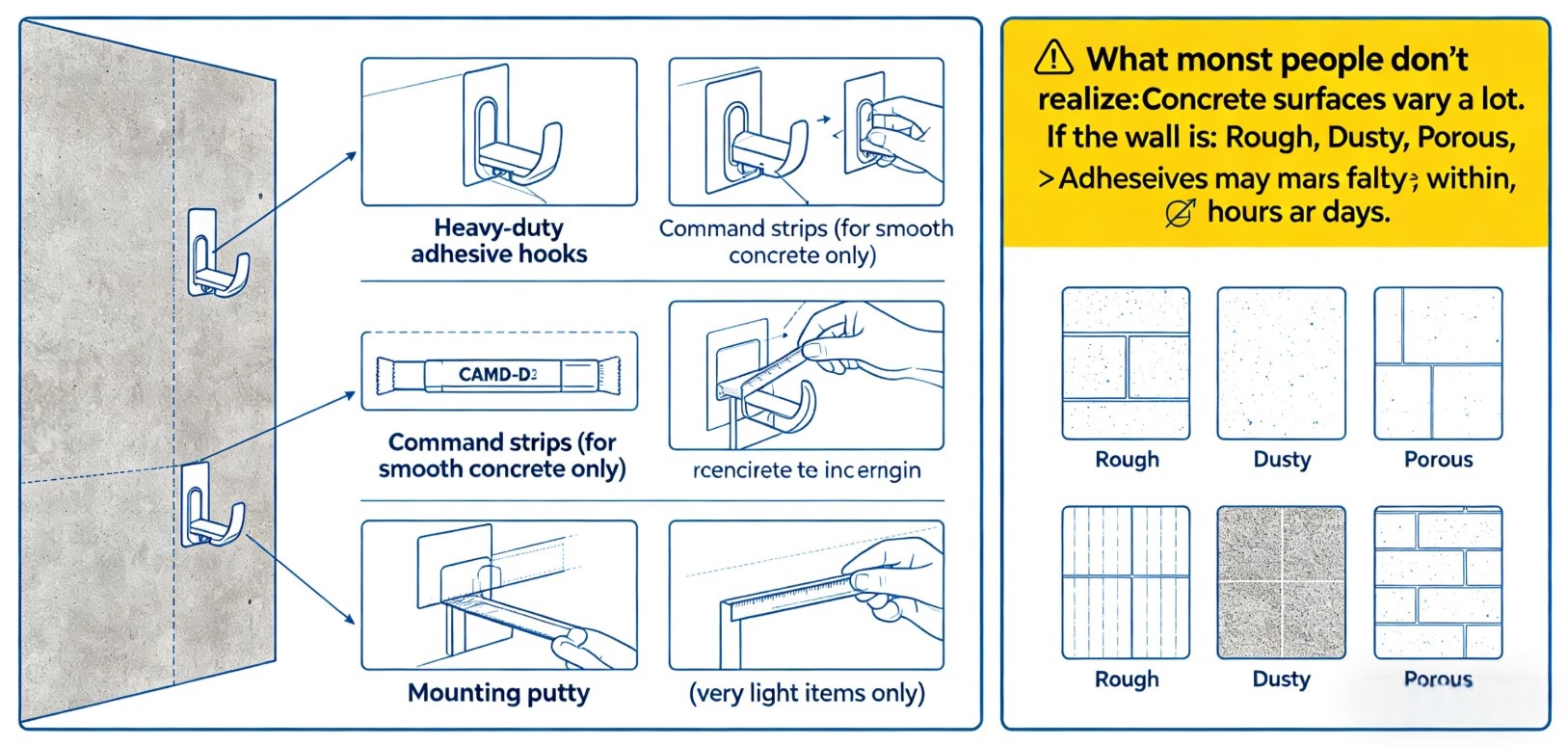
✔️ Options that can work:
-
Heavy-duty adhesive hooks
-
Command strips (for smooth concrete only)
-
Mounting putty (very light items only)
⚠️ What most people don’t realize:
Concrete surfaces vary a lot.
If the wall is:
-
Rough
-
Dusty
-
Porous
👉 Adhesives may fail within hours or days.
Common Mistakes That Crack Concrete Walls
Avoid these at all costs:
❌ Drilling too fast at the start
→ Causes slipping and surface damage
❌ Using the wrong drill bit
→ Wastes time and overheats tools
❌ Skipping anchors
→ Leads to loose or falling frames
❌ Poor planning
→ Extra holes = permanent wall damage
Pro Tip: Plan Your Layout Before You Drill
This is where most people underestimate the risk.
Once you drill into concrete: 👉 There’s no easy undo.
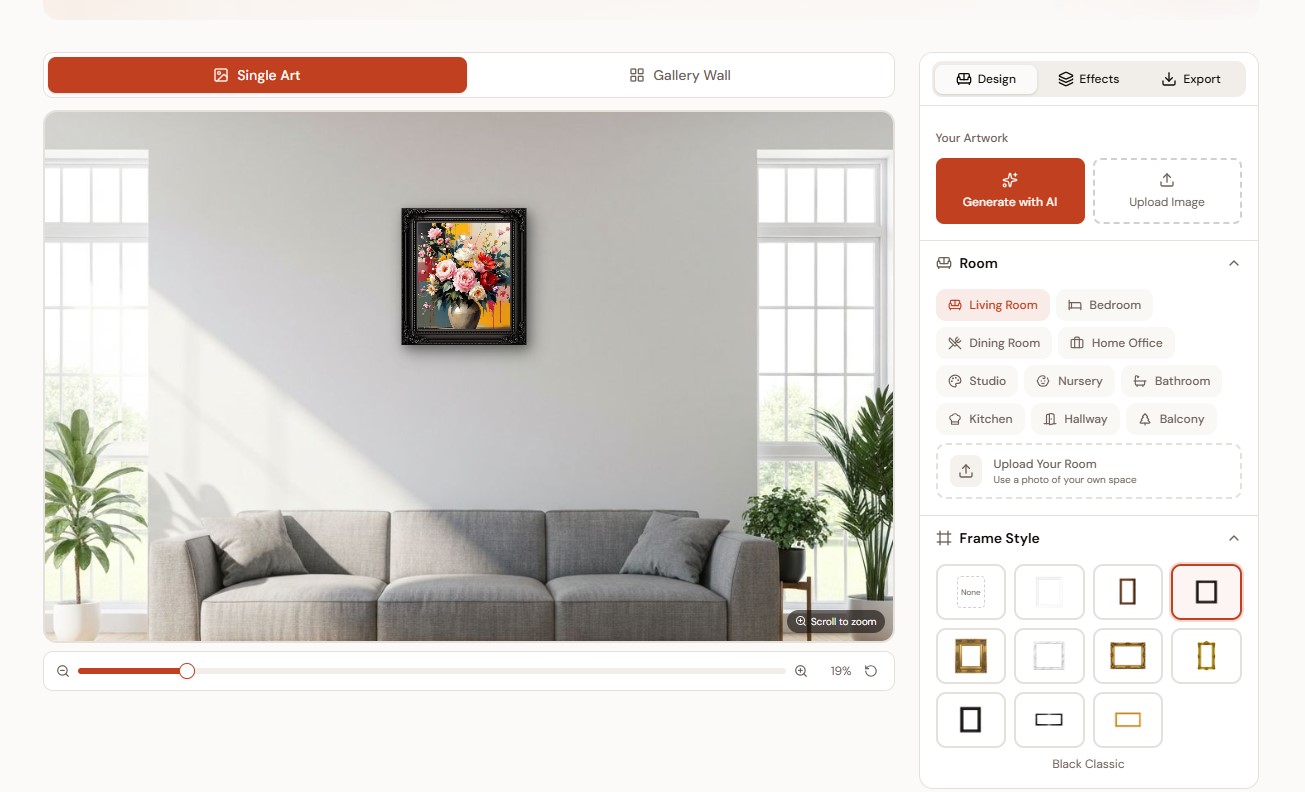
That’s why it’s smart to plan your layout digitally first.
-
Preview your gallery wall
-
Adjust spacing and alignment
-
Avoid unnecessary holes
👉 Especially useful for concrete walls where precision matters.
FAQ: Hanging Art on Concrete Walls
Can you hang pictures on concrete walls without drilling?
Yes, but only for lightweight items. Adhesive hooks and mounting strips can work on smooth concrete surfaces, but they may fail on rough or dusty walls. For anything over 5 lbs, drilling is the safest option.
What is the best anchor for concrete walls?
The best anchors for concrete walls are expansion anchors or sleeve anchors for heavy items, and plastic wall anchors for medium-weight frames. These provide a secure grip inside dense concrete.
Do you need a hammer drill for concrete walls?
A hammer drill is highly recommended because it combines rotation with impact, making it much easier to drill into concrete. A regular drill may work for small holes but is less efficient and harder to control.
Will drilling into concrete crack the wall?
Not if done correctly. Cracks usually happen when drilling too fast, using the wrong drill bit, or applying excessive force. Starting slowly and using a masonry bit helps prevent damage.
What is the easiest way to hang art on concrete walls?
The easiest method is using adhesive hooks for lightweight art. However, for long-term stability and heavier pieces, concrete screws or anchors are more reliable.
Final Thoughts
Hanging art on a concrete wall isn’t difficult—it’s just less forgiving.
If you remember one thing, it’s this:
👉 Preparation matters more than execution
-
Choose the right method based on weight
-
Use proper tools (not shortcuts)
-
Plan your layout before drilling
Do that, and your art will stay exactly where it belongs—secure, level, and damage-free.