Wallnora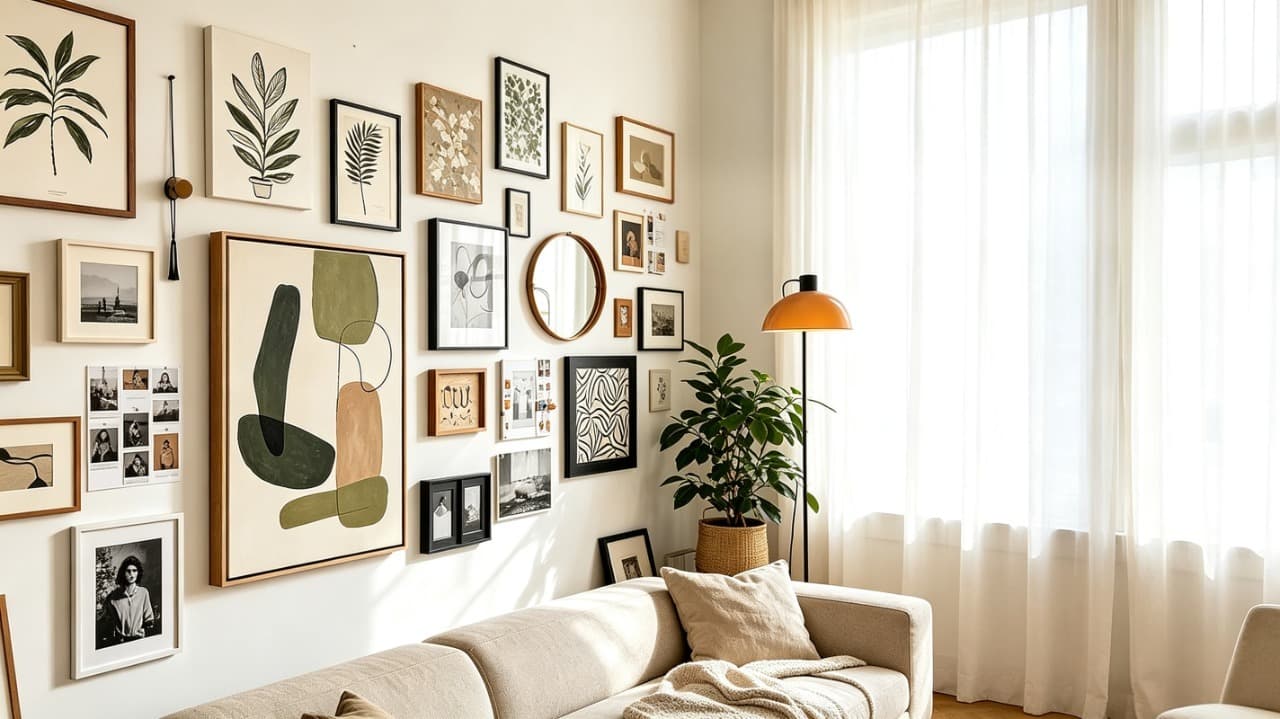
Blank walls can make a room feel unfinished, but choosing the right wall art isn't always easy. The artwork needs to work with the size of the wall, the furniture around it, the room's mood, and your personal style.
The good news is that wall art doesn't have to mean one framed painting above the sofa. You can create a gallery wall, use one oversized statement piece, combine different frame styles, display personal photos, or create artwork specifically for your space.
In this guide, you'll find 35 wall art ideas organized by room, size, style, and decorating approach. You'll also learn how to choose artwork that fits your space—and how to preview your choices before you print and hang them.
Wall Art Ideas for Every Room
The best wall art depends partly on where you're putting it. A dramatic statement piece can work beautifully in a living room, while a bedroom may benefit from something quieter and more personal.
Here are some ideas for the most common rooms and spaces in a home.
1. Create a Gallery Wall in the Living Room
A gallery wall is one of the most flexible ways to decorate a large living room wall. Instead of relying on one oversized artwork, combine several smaller pieces into one visual composition.
You can mix paintings, photography, illustrations, typography, and personal photos. To keep the arrangement cohesive, connect the pieces through a shared color palette, subject, frame style, or overall mood.
A gallery wall can be symmetrical and structured or more relaxed and eclectic. Both approaches can work—the important part is making the collection feel intentional.
Gallery walls remain a versatile option for living rooms, dining rooms, hallways, staircases, and other spaces where you want to create a focal point.
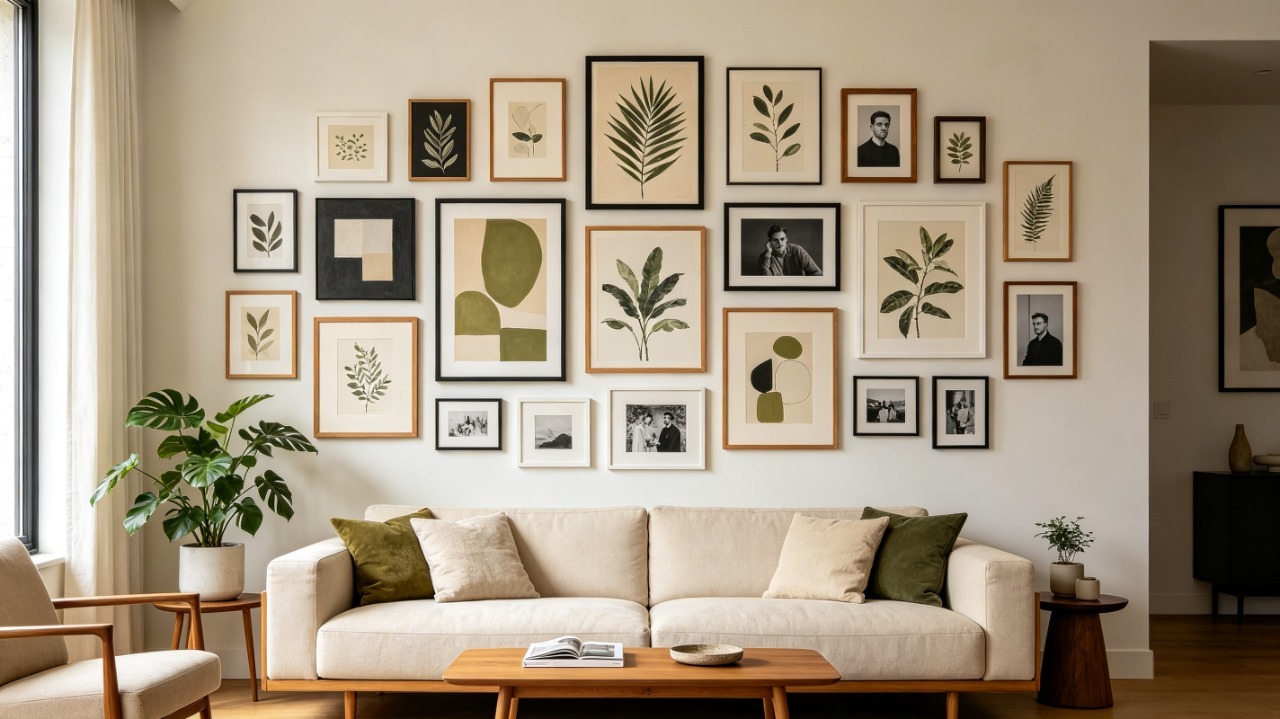
2. Hang One Large Statement Artwork Above the Sofa
If you prefer a cleaner look, skip the gallery wall and make one large piece the focal point.
An oversized abstract painting, landscape, botanical composition, or AI-generated artwork can visually anchor the sofa and fill a large section of wall without making the room feel crowded.
This approach works particularly well when the furniture and accessories are already visually interesting.
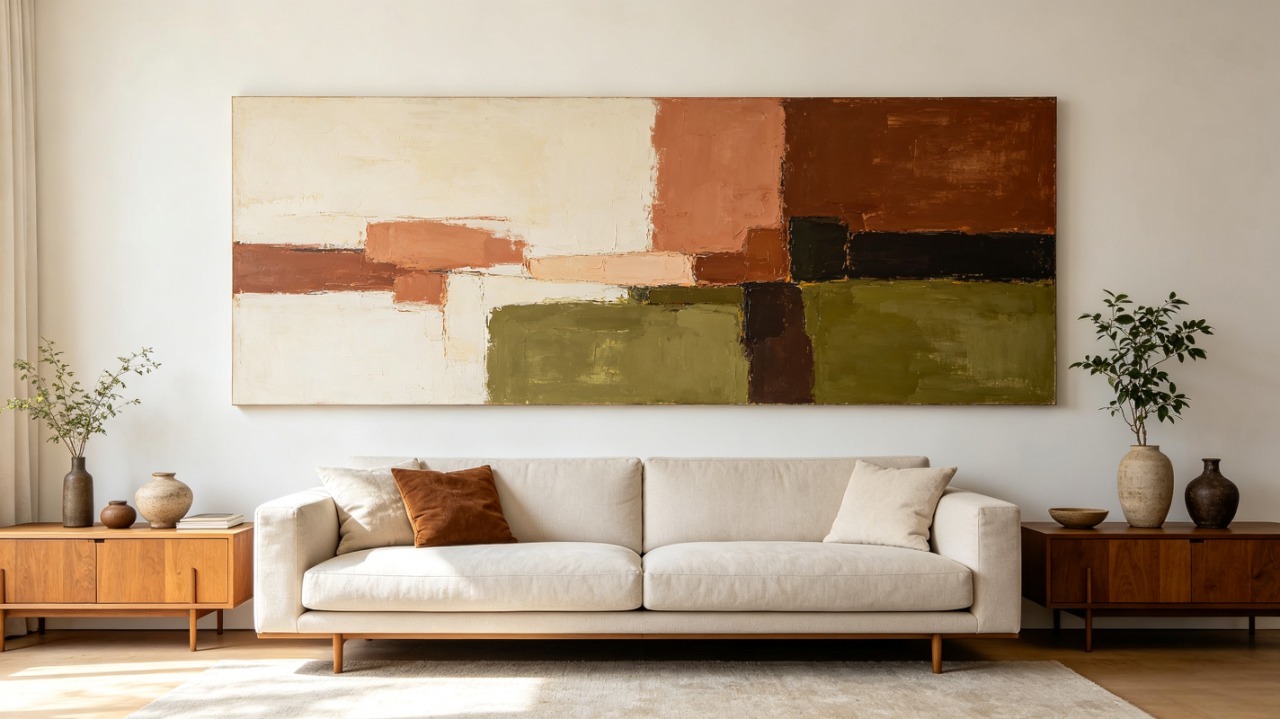
3. Use a Pair of Matching Prints in the Bedroom
Bedrooms often benefit from a more balanced and calming arrangement.
Try two related artworks above the bed, such as:
-
Two botanical prints
-
Two abstract compositions
-
Two black-and-white photographs
-
Two complementary landscapes
-
Two minimalist line drawings
The pieces don't have to be identical. Using the same frame with slightly different artwork can create a coordinated look without feeling overly formal.
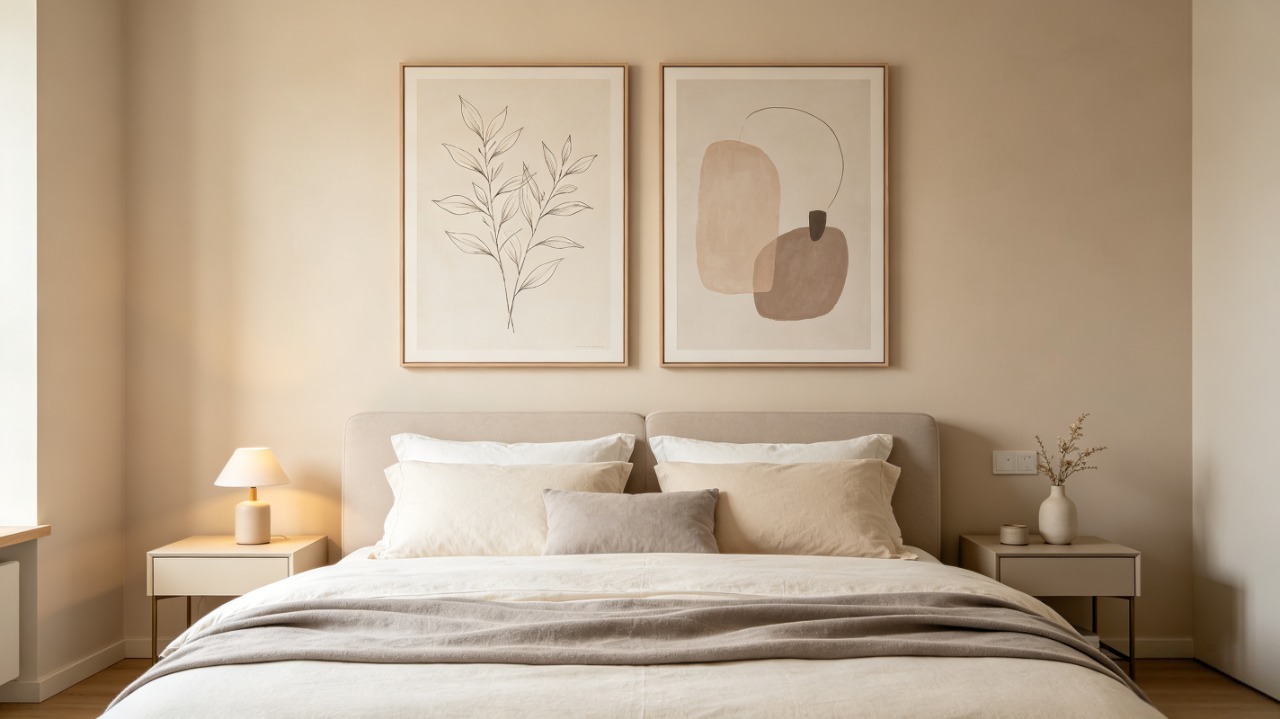
4. Create a Calm Bedroom Art Collection
Instead of choosing artwork simply because it looks attractive, think about the atmosphere you want your bedroom to have.
Soft landscapes, warm neutral abstracts, botanical illustrations, and minimalist line art can work well when you want the room to feel relaxed.
Current interior design coverage has also emphasized softer, tonal artwork and more personal, intentionally edited displays for bedrooms.
5. Add Botanical Art to the Bathroom
Bathrooms are often overlooked when decorating walls.
Botanical illustrations, leaves, flowers, coastal scenes, and minimalist nature photography can add visual interest without overwhelming a relatively small space.
For bathrooms, pay attention to moisture and the material of the print and frame. In a humid environment, the materials you choose matter as much as the artwork itself.
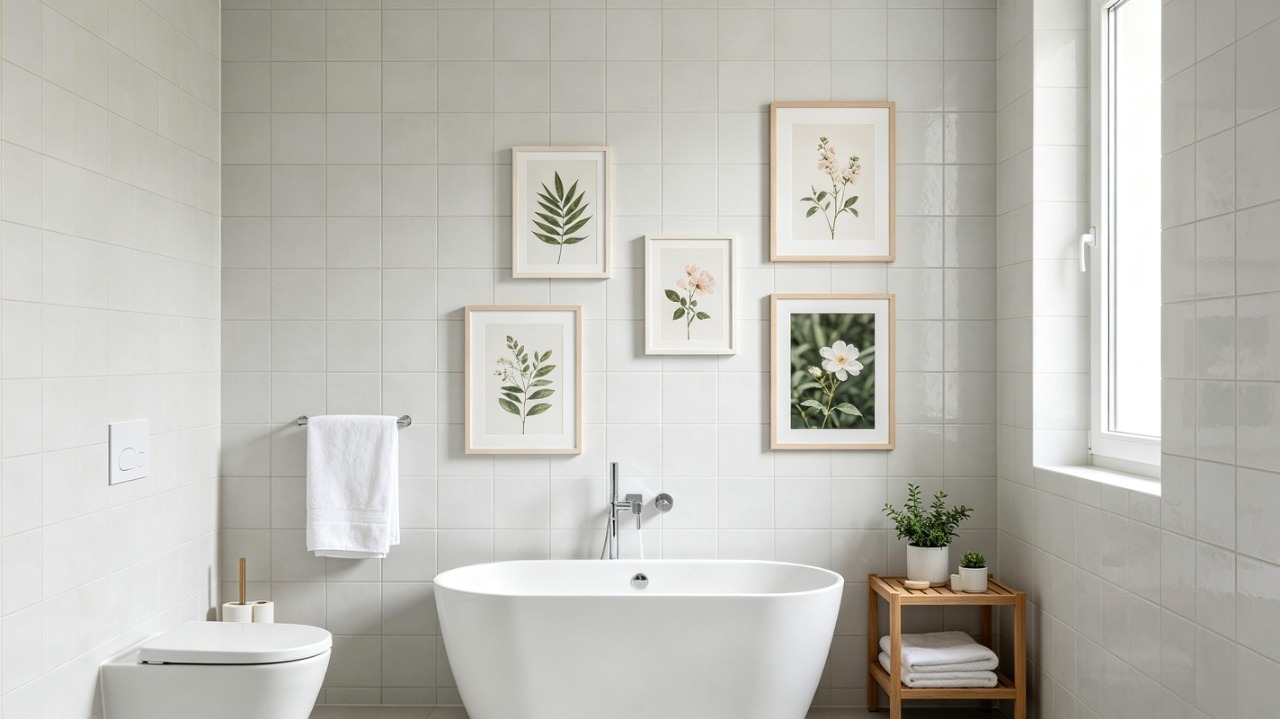
6. Try Coastal or Spa-Inspired Bathroom Art
If your bathroom has a clean, neutral design, artwork can reinforce that feeling.
Consider:
-
Ocean photography
-
Soft blue abstracts
-
Seashell or botanical illustrations
-
Minimalist landscapes
-
Neutral spa-inspired artwork
You can also use a small set of coordinated prints instead of one large piece.
7. Make the Dining Room More Dramatic
The dining room is a good place to use artwork with more personality.
Try a large abstract piece, a bold botanical print, vintage-inspired artwork, or a series of related prints.
Because dining rooms often have fewer decorative objects than living rooms, wall art can become the main visual feature.
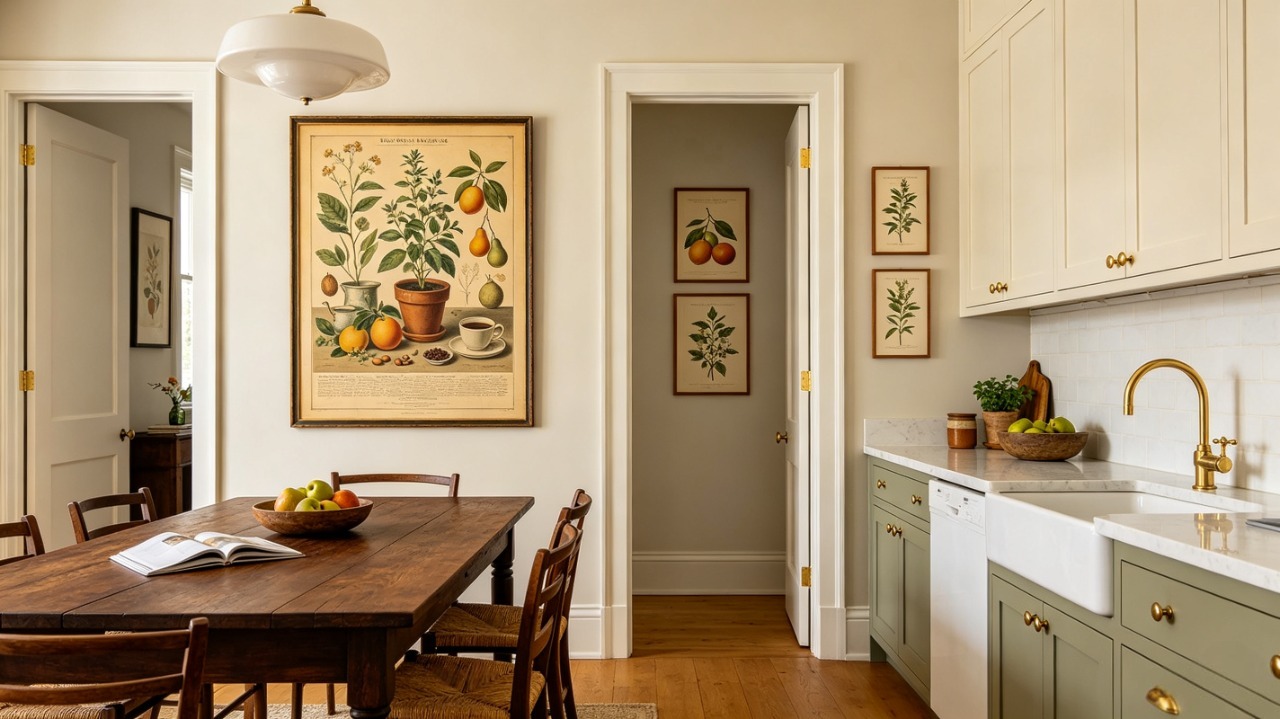
8. Use Food-Inspired Art in the Kitchen
Kitchen walls are perfect for artwork that feels playful and informal.
Ideas include:
-
Vintage food illustrations
-
Botanical prints
-
Coffee or tea artwork
-
Fruit and vegetable illustrations
-
Recipe-inspired typography
-
Vintage kitchen posters
For smaller kitchen walls, a single small print or a narrow vertical arrangement may work better than a large gallery wall.
9. Give Your Home Office a Visual Focal Point
Your home office doesn't have to look purely functional.
Consider minimalist abstracts, geometric artwork, photography, landscapes, or artwork with structured compositions.
If you spend long periods working in the room, avoid choosing something simply because it is visually striking. Consider whether the colors and composition make the space feel focused rather than distracting.
10. Turn an Entryway Into a First Impression
The entryway is often a small space, which makes it a good place for one carefully chosen artwork.
A medium-sized statement piece above a console table can establish the visual style of the home before someone enters the main living area.
For narrow entryways, vertical artwork can make better use of the available wall space.
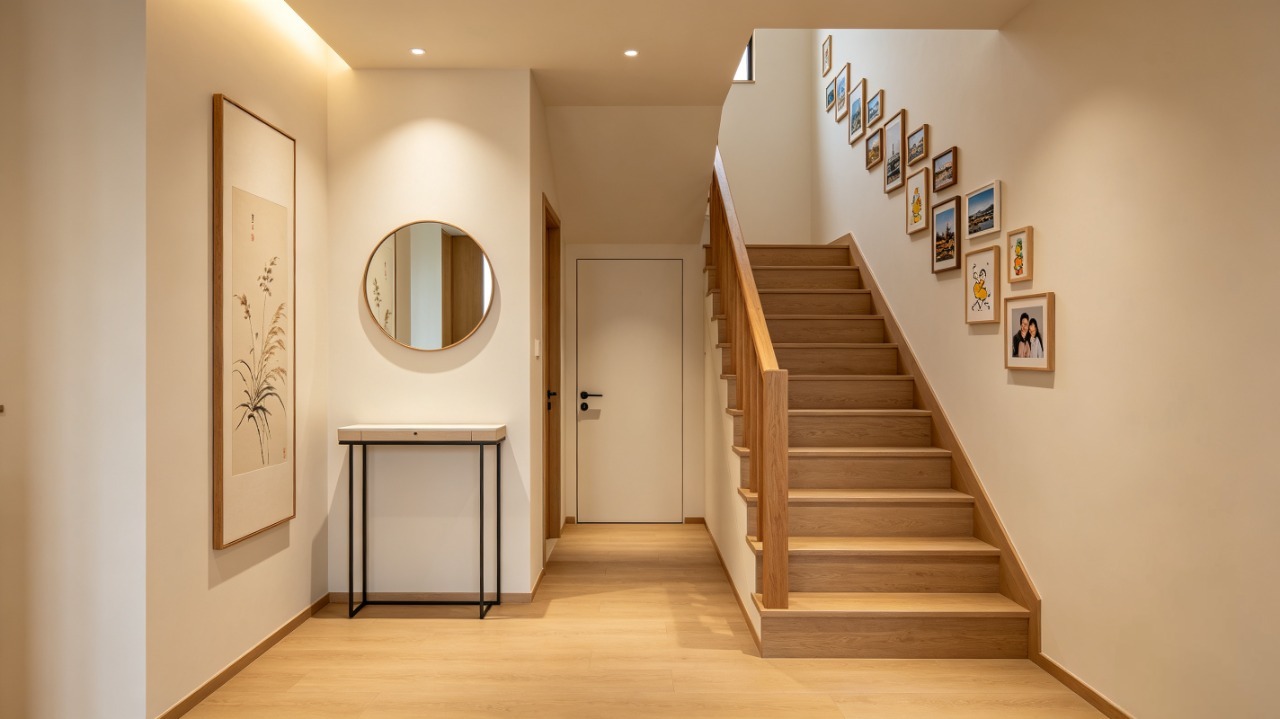
11. Use Art Along a Staircase
Staircases can be difficult to decorate because of their unusual wall shape.
One option is to create a collection that follows the angle of the stairs. Family photographs, travel images, illustrations, or small prints can work particularly well here.
Instead of trying to make every frame perfectly symmetrical, focus on maintaining consistent spacing and an overall visual rhythm.
Wall Art Ideas by Size
The size of your wall should influence the size and number of artworks you choose.
A common mistake is choosing artwork based only on whether you like the image, without considering how it will look relative to the furniture and wall around it.
Scale and proportion are important factors when selecting wall art for a room.
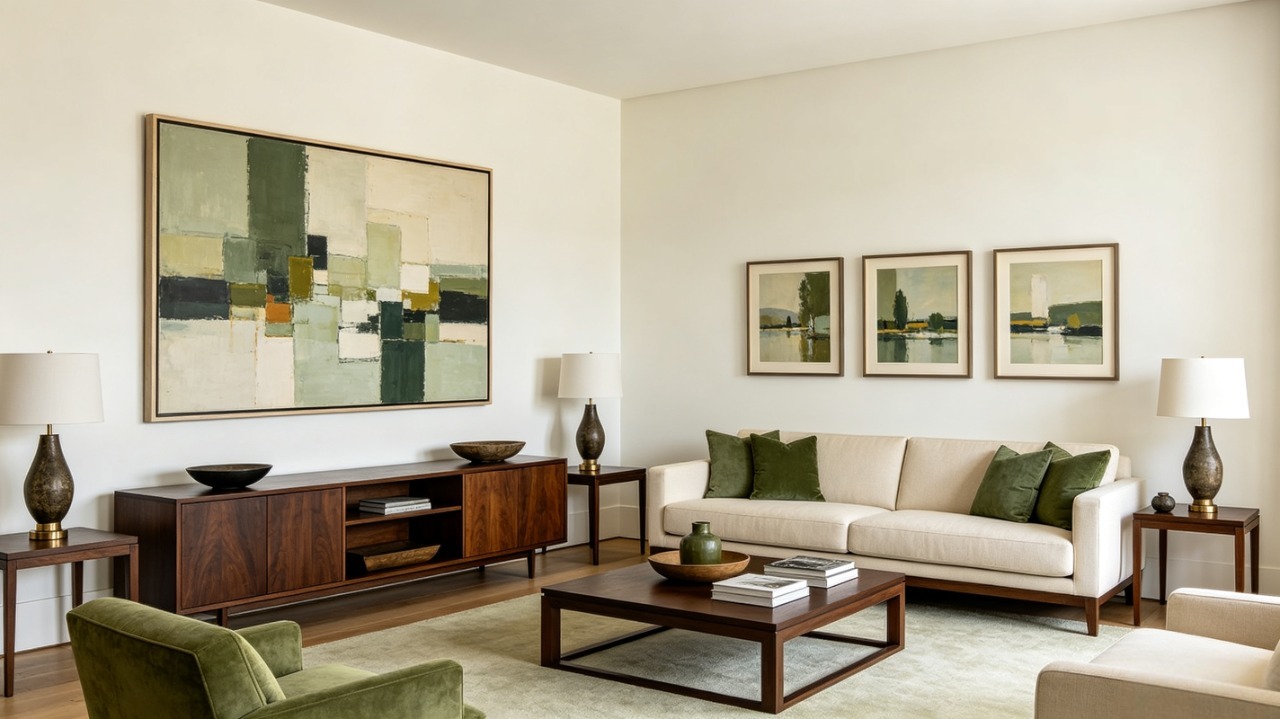
12. Fill a Large Wall With One Oversized Piece
A huge empty wall doesn't always need a huge collection of small frames.
One oversized artwork can create a much cleaner focal point.
This works especially well above:
-
Large sofas
-
Sideboards
-
Beds
-
Dining tables
-
Fireplaces
Choose artwork with enough visual weight to balance the furniture beneath it.
13. Use a Triptych on a Large Wall
A triptych divides one artwork into three related panels.
It can create the visual impact of a large piece while adding more structure to the wall.
Landscape scenes, abstract artwork, botanical designs, and minimalist compositions are particularly suitable for this format.
14. Create a Floor-to-Ceiling Gallery Wall
If you have a very large blank wall, consider extending a gallery arrangement vertically.
Instead of stopping the artwork at a small rectangular area, allow the composition to occupy a much larger section of the wall.
The key is to create a clear visual relationship between the pieces rather than simply filling every available space.
15. Hang Two Large Pieces Side by Side
You don't always need one giant artwork.
Two large pieces placed next to each other can create balance while giving you more flexibility in choosing the artwork.
They can be:
-
Identical
-
Similar in color
-
From the same collection
-
Contrasting but complementary
16. Use Small Art on Narrow Walls
Small walls are often easier to decorate with smaller artwork rather than trying to force a large piece into the space.
Try:
-
One small framed print
-
A pair of small artworks
-
A narrow vertical print
-
A miniature gallery wall
-
Artwork displayed on a picture ledge
Small artwork can also work well in corners, hallways, and spaces between doors or windows.
17. Build a Small Gallery Wall
Gallery walls don't have to contain ten or twenty pieces.
A simple arrangement of three to five artworks can create a more minimalist look.
A small gallery wall can be particularly useful above a small console, in an entryway, beside a staircase, or in a bedroom.
Wall Art Ideas by Style
Your artwork doesn't have to match every piece of furniture in the room. Instead, look for a visual connection through color, texture, subject, or mood.
18. Modern Wall Art
For a modern interior, consider geometric compositions, abstract artwork, monochrome photography, bold shapes, or restrained color palettes.
The artwork should complement the clean lines of the furniture rather than compete with them.
19. Abstract Wall Art
Abstract art gives you more freedom to coordinate artwork with an existing room.
Instead of matching the artwork to one specific object, choose colors that appear throughout the space.
For example, if your room contains beige furniture, dark wood, and muted green accents, an abstract print incorporating those tones can connect the different elements visually.
20. Minimalist Wall Art
Minimalist artwork works particularly well in rooms where you want the walls to feel intentional without looking busy.
Try:
-
Line drawings
-
Simple geometric forms
-
Neutral abstracts
-
Black-and-white photography
-
Single-color compositions
One carefully chosen piece can often have more impact than several unrelated decorations.
21. Botanical and Floral Wall Art
Botanical artwork can introduce natural shapes and colors without requiring actual plants.
You can use individual botanical prints, a coordinated set, or a larger floral composition.
For a more modern look, choose simplified or abstract botanical artwork rather than highly detailed traditional illustrations.
22. Black-and-White Wall Art
Black-and-white photography and monochrome artwork are easy to coordinate with many interiors.
They work particularly well when the room already contains strong colors and you want the wall to provide visual balance.
A black frame can create a more graphic look, while a lighter wood frame can soften the overall composition.
23. Vintage-Inspired Wall Art
Vintage artwork can add character to an otherwise contemporary room.
Consider old botanical illustrations, vintage travel posters, historical photography, antique-inspired paintings, or retro graphic designs.
You don't need every piece in the room to be vintage. One or two older-looking pieces can create contrast against modern furniture.
24. Japanese-Inspired Wall Art
Japanese-inspired artwork can work especially well with minimalist interiors.
Consider:
-
Ink-style landscapes
-
Japanese botanical artwork
-
Ukiyo-e-inspired compositions
-
Minimalist nature scenes
-
Neutral abstract artwork
Keep the surrounding decor relatively restrained so the artwork has room to breathe.
Creative Wall Art Ideas
Beyond choosing a style or room, you can change the way artwork is displayed.
25. Combine Different Frame Styles
You don't necessarily need every frame to match.
A combination of black, natural wood, white, or vintage-style frames can create a more collected look.
If you mix frame styles, use another element—such as color, subject matter, or spacing—to keep the overall arrangement cohesive.
26. Mix Artwork With Personal Photos
Your wall doesn't have to be made entirely of purchased artwork.
Combine artwork with:
-
Family photographs
-
Travel photos
-
Children's drawings
-
Personal illustrations
-
Meaningful objects
This can make a gallery wall feel more personal than a collection of purely decorative prints.
27. Create a Monochromatic Gallery Wall
Choose artwork within one color family.
For example, a blue-toned collection could include:
-
Ocean photography
-
Abstract blue artwork
-
Blue botanical prints
-
Vintage illustrations
The subjects can differ while the color palette ties everything together.
28. Use a Picture Ledge
A picture ledge gives you more flexibility than permanently hanging every artwork.
Layer several framed prints at different heights and swap them whenever you want to change the room.
It is particularly useful if you like experimenting with different artwork combinations.
29. Combine Art With a Mirror
Artwork doesn't have to occupy every inch of your wall.
A mirror can become part of the composition, especially in an entryway or dining room.
For example, place a round mirror between two framed artworks or combine a mirror with a small gallery arrangement.
30. Create Personalized Wall Art
Personalized artwork can turn something decorative into something meaningful.
Ideas include:
-
Family names
-
Favorite places
-
Travel destinations
-
Coordinates
-
Custom illustrations
-
Pet portraits
-
Meaningful dates
AI image generation can also make it possible to create artwork around a specific room, subject, color palette, or visual style rather than choosing from generic designs.
31. Try AI-Generated Wall Art
Instead of searching endlessly for artwork that almost matches your room, you can create something specifically around your preferred style.
For example, you could create:
-
A neutral abstract for a beige living room
-
A Japanese-inspired landscape for a minimalist bedroom
-
Botanical artwork using your preferred colors
-
A custom family or pet illustration
-
A large-format landscape for an empty wall
The advantage is not simply generating an image. You can create artwork with the eventual room, size, and style in mind.
32. Create a Themed Wall
A themed wall can tell a story through multiple pieces.
Possible themes include:
-
Travel
-
Nature
-
Architecture
-
Food
-
Family
-
Photography
-
Coastal living
-
Abstract art
Choose a theme broad enough to give you variety while maintaining a recognizable visual connection.
DIY Wall Art Ideas
If you enjoy making things yourself, wall art can also become a creative project rather than something you simply buy.
33. Paint Your Own Abstract Canvas
You don't need advanced painting skills to create an abstract piece.
Start with a limited palette that works with your room, then experiment with shapes, lines, texture, and layers.
34. Create a Photo Collage
Print several favorite photographs and arrange them into a grid or organic gallery wall.
This is especially effective in bedrooms, hallways, and family spaces.
35. Turn a Digital Design Into Printable Wall Art
Another approach is to create artwork digitally and print it yourself.
You can design an illustration, create an AI-generated image, or customize an existing concept, then download a high-resolution version for printing.
This gives you much more control over the final size, colors, and style than choosing a ready-made print.
How to Choose the Right Wall Art
Having plenty of wall art ideas is useful, but choosing between them is often the harder part.
Before buying or printing anything, consider these five factors.
Consider the Wall Size
Start with the wall rather than the artwork.
Measure the available area and consider the furniture below it. A small print can disappear on a large empty wall, while an oversized piece can overwhelm a narrow space.
If you're deciding between several sizes, visualize each option before committing.
Match the Artwork to the Room
Think about the role of the room.
A living room may be able to handle a stronger statement piece. A bedroom may call for softer artwork. A dining room can support something more dramatic, while a small entryway may only need one carefully selected piece.
Coordinate Colors Without Matching Everything
Your wall art doesn't need to contain exactly the same colors as your sofa, rug, or curtains.
Instead, look for relationships.
If your room is mostly neutral, artwork can introduce a stronger accent color. If the room already has several bold colors, more restrained artwork may provide balance.
Choose One Large Piece or a Gallery Wall
This is one of the biggest decisions you'll make.
Choose one large piece when you want:
-
A clean appearance
-
A strong focal point
-
Less visual clutter
-
A simple decorating solution
Choose a gallery wall when you want:
-
More personality
-
Multiple subjects or styles
-
Family photos
-
A collected look
-
More flexibility over time
If you're unsure, visualize both options before deciding.
Pick the Right Frame
The frame can significantly change how the same artwork feels.
Black frames can create stronger contrast. Natural wood can add warmth. White frames can create a lighter, minimalist appearance.
There's no universal "right" frame color. The better choice depends on the artwork and the room around it.
Preview Your Wall Art Before You Print
Choosing wall art from a product page or inspiration board is one thing. Knowing whether it will actually work on your wall is another.
An artwork that looks perfect online may feel too small above your sofa. A frame that looks beautiful by itself may not work with your furniture. And a gallery wall that looks balanced in someone else's home may have completely different proportions in yours.
That's why it can be useful to preview your choices before printing or framing them.
With Wallnora, you can:
-
Upload a photo of your room or wall.
-
Add or create artwork for the space.
-
Adjust the artwork size.
-
Compare different styles and compositions.
-
Try different frame options.
-
Choose the version that works best.
-
Download the finished artwork for printing.
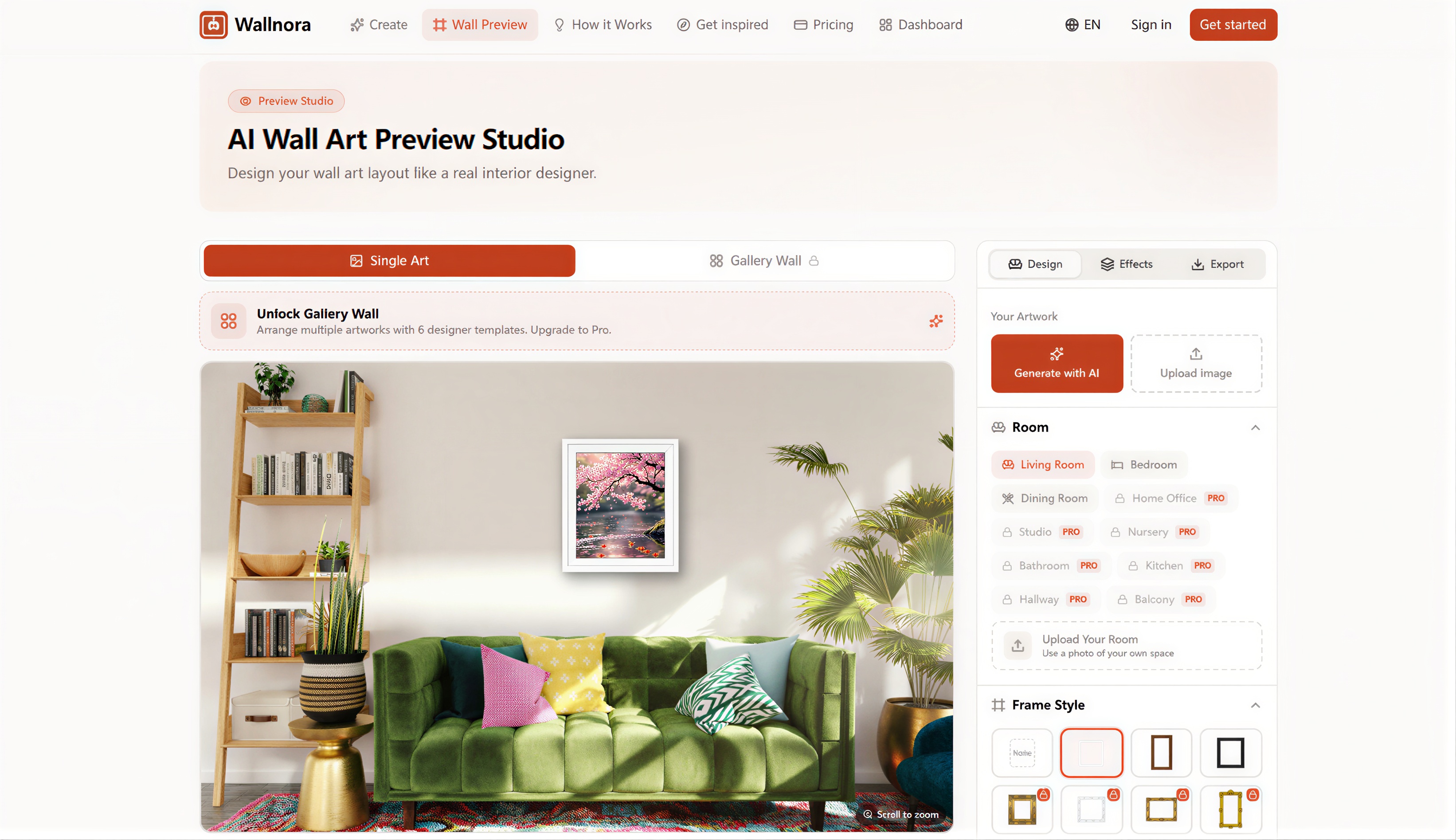
Instead of asking, "Will this look good on my wall?", you can test the idea first.
This is especially useful when you're deciding between a large statement piece and a gallery wall, comparing different artwork sizes, or choosing between frame colors.
Final Thoughts
The best wall art ideas aren't necessarily the most complicated ones.
Sometimes a single oversized artwork is enough. Sometimes a three-piece arrangement works better. In another room, a personal gallery wall or a collection of smaller prints may be the right choice.
The key is to consider the room, the wall size, the furniture, the color palette, and the mood you want to create before choosing the artwork.
And when you're unsure, don't rely entirely on your imagination. Preview different options on your actual wall first.
With the right combination of Create → Preview → Print, you can move from a blank wall and a vague idea to artwork that actually fits your space.