Wallnora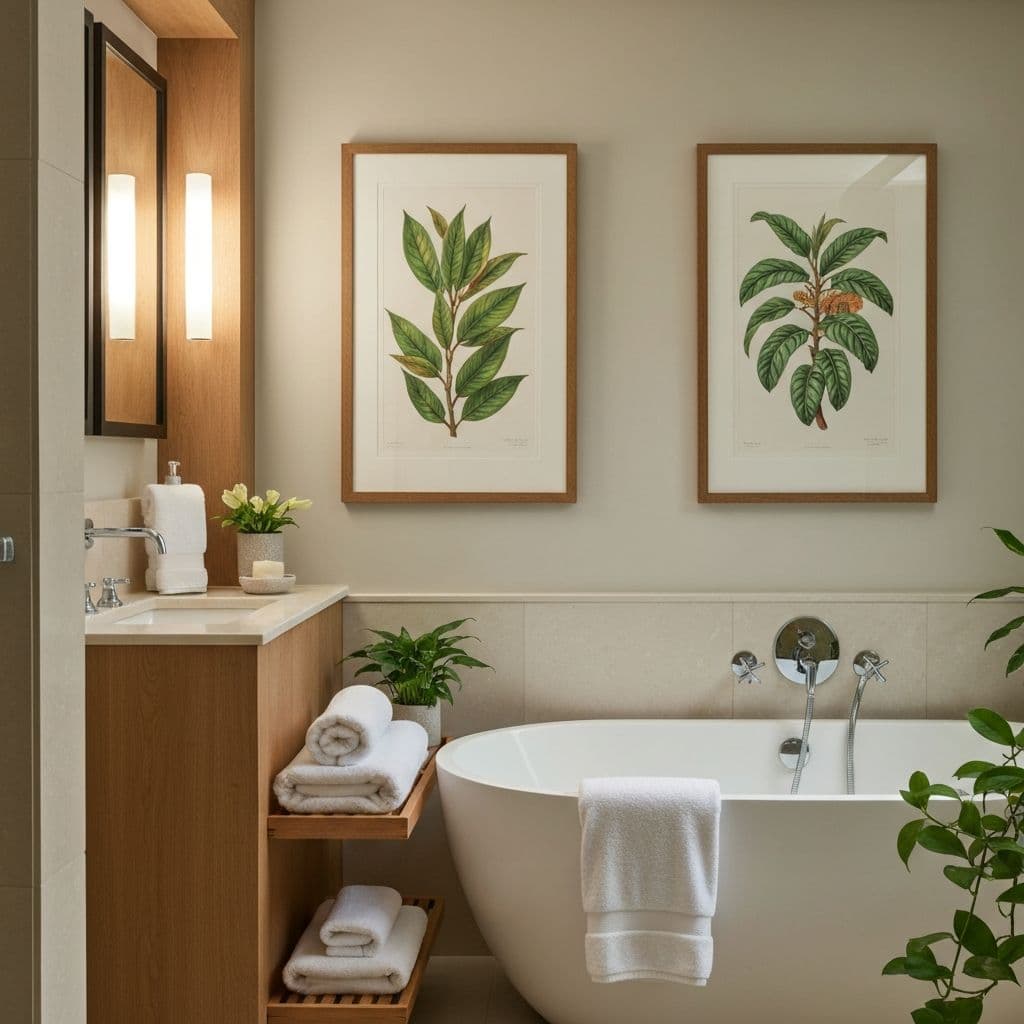
Blank bathroom walls are a missed opportunity. With the right material choices and placement strategy, your bathroom can showcase art just as beautifully as any other room in your home. Whether you are designing a serene spa retreat or making a bold statement above the vanity, this guide covers everything from moisture-resistant printing methods to the art styles that work best in wet environments.
Can You Really Hang Art in a Bathroom?
The short answer: absolutely. The longer answer involves understanding your bathroom's humidity zones. Not all bathroom walls are created equal when it comes to moisture exposure.
Zone 1 (High humidity): Directly above the shower or bathtub, where steam hits directly. Use only metal prints, sealed acrylic mounts, or vinyl art here. Paper and unprotected canvas will warp or grow mold.
Zone 2 (Moderate humidity): The wall opposite the shower, the area above the toilet, and next to the vanity. Sealed canvas prints, framed art behind glass, and acrylic-mounted prints all work well here.
Zone 3 (Low humidity): Powder rooms, half-baths, and well-ventilated bathrooms. Standard framed printable wall art works perfectly -- treat these spaces like any other room.
The golden rule: if your bathroom has an exhaust fan (and it should), use it during and after every shower. Proper ventilation protects both your art and your walls.
Art Styles That Thrive in Bathrooms
Botanical and Nature Prints
Ferns, eucalyptus, monstera leaves, and botanical line drawings create a natural spa atmosphere that feels inherently right in a bathroom. The connection between water, bathing, and nature makes botanical art the most intuitively fitting choice for these spaces.
Watercolor botanicals in soft greens and whites are the single most popular bathroom art choice among interior designers we surveyed. The gentle washes of color feel soothing and complement the bathroom's typically clean aesthetic. For a more structured look, detailed botanical illustrations -- the kind you would find in a Victorian herbarium -- add scholarly elegance.
Coastal and Water Themes
Ocean photography, wave abstracts, and beach landscapes feel naturally at home in bathrooms. The connection between water-themed art and a water-centric room is subconscious but powerful. A large-format ocean horizon photograph above a freestanding tub creates a breathtaking focal point.
For a more abstract interpretation, abstract paintings in aquatic blues and teals work beautifully. Think fluid, organic shapes that suggest water movement without being literally representational.
Minimalist Line Art
Single-line drawings of faces, figures, or simple organic shapes add sophistication without overwhelming a small space. Black ink on white canvas is timeless for bathrooms because it matches virtually any tile color and vanity finish. The simplicity also means these pieces work at smaller sizes -- perfect for the compact walls most bathrooms offer.
Japanese-Inspired Serenity
The Japanese bathing tradition (ofuro) has long connected water and tranquility. Japanese-style art -- whether traditional ink wash landscapes, cherry blossom branches, or zen stone arrangements -- brings that same contemplative quality to Western bathrooms. A pair of small Japanese prints flanking a mirror creates an instant spa atmosphere.
Sizing Art for Bathroom Walls
Bathrooms present unique sizing challenges because the walls are interrupted by mirrors, cabinets, towel bars, and fixtures. Here are the most common bathroom wall art placements and their ideal sizes:
- Above the toilet: A narrow vertical piece (28x43 cm / 11x17 inches) or a small square (30x30 cm / 12x12 inches). This is the most common bathroom art spot and the easiest to get right.
- Above the bathtub: Go wider here -- a horizontal piece at 60x90 cm (24x36 inches) creates a luxurious, gallery-like feel. This is where you can make a real statement.
- Between vanity mirror and ceiling: A narrow horizontal piece or a set of two small frames side by side. Keep proportions in line with the mirror width below.
- On the door back: Often overlooked, but a small framed print on the back of the bathroom door adds a private design moment visible only when the door is closed.
Not sure what size works best? Use a mockup tool to visualize different sizes on your bathroom walls before ordering prints. For comprehensive sizing advice for all rooms, see our wall art sizing guide.
Creating a Bathroom Gallery Wall
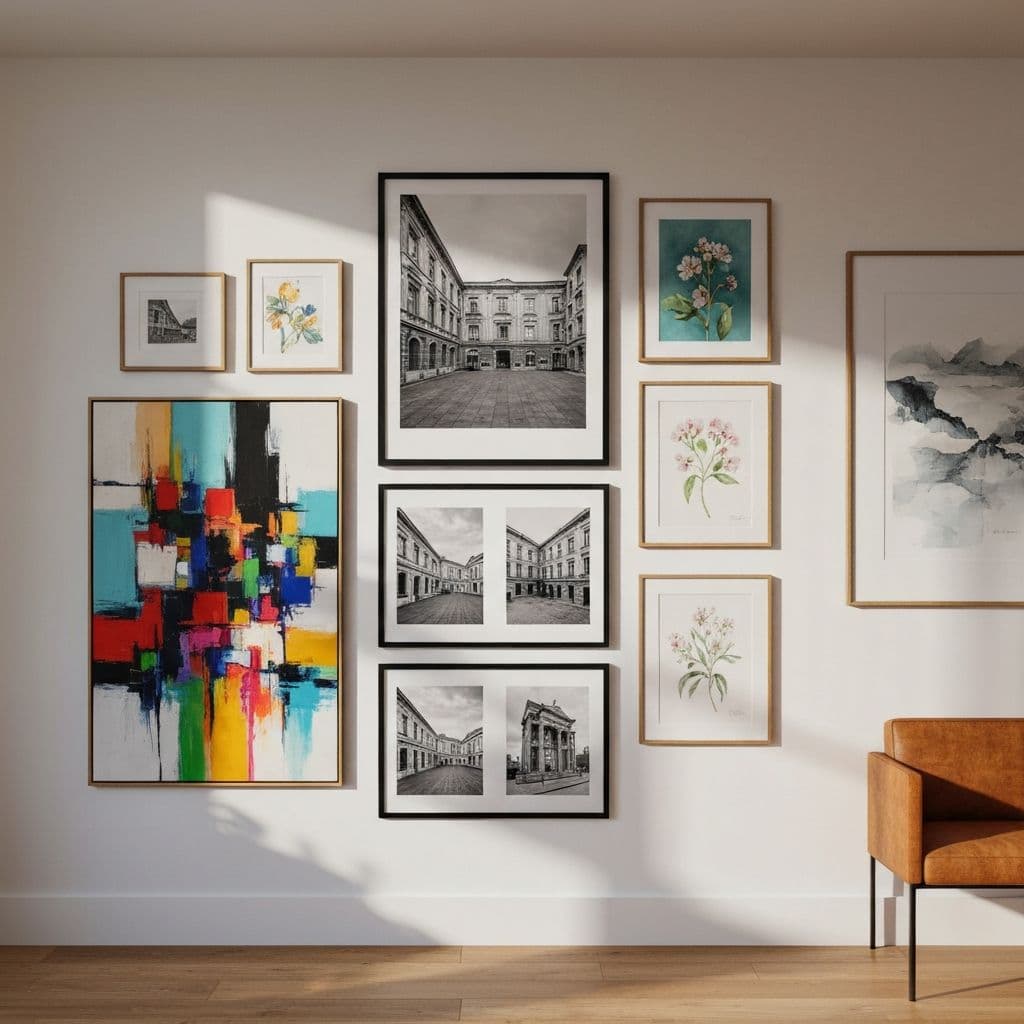
Small bathrooms can absolutely support a gallery wall -- you just need to scale down. A 2x2 grid of matching botanical prints above the toilet, or a vertical stack of three small ocean photographs beside the mirror, can transform an otherwise bare wall into a design feature.
For gallery wall planning, the same principles apply as in any room. Start with a template, plan the layout digitally, then hang. Our gallery wall layout guide covers templates that work in tight spaces, including the vertical stack and the mini-grid that are ideal for bathrooms.
Color Palettes That Work in Bathrooms
Bathrooms tend toward clean, light palettes -- white tiles, chrome fixtures, neutral countertops. Your art can either complement that serenity or provide a deliberate contrast.
Harmonious approach: Choose art in soft greens, pale blues, warm whites, and subtle earth tones. These blend seamlessly with typical bathroom aesthetics and create a unified spa-like feel.
Contrast approach: A single bold piece in deep navy, emerald, or burnt orange against an all-white bathroom creates dramatic visual impact. This works best when the art is the only strong color in the room.
Monochrome approach: Black-and-white photography or line art against white tiles is foolproof. It reads as sophisticated in any style of bathroom, from ultra-modern to traditional.
Practical Tips for Bathroom Art
- Frame with glass: Glass fronts protect prints from moisture. Ensure the frame is sealed at the back to prevent humidity from entering through the rear.
- Avoid direct water contact: Even metal prints should not be placed where water regularly splashes. Position art where it can be admired but stays dry.
- Consider removable adhesive: Command strips and similar products let you hang art without drilling into potentially waterproofed walls.
- Rotate seasonally: Bathrooms are small enough that a single art swap completely changes the feel. Keep two or three options and rotate every few months.
- Match your hardware: If your faucet and fixtures are brushed gold, choose gold or warm-toned frames. Chrome fixtures pair with silver or black frames.
From Idea to Your Bathroom Wall
Ready to transform your bathroom? Here is the process:
- Browse bathroom-specific art styles and generate pieces that match your bathroom's color palette
- Preview the art in a bathroom setting to check scale and color harmony
- Download a high-resolution file suitable for your chosen print medium
- Print on appropriate material (metal, acrylic, or sealed canvas for high-humidity areas; standard paper for powder rooms)
- Hang using appropriate hardware for your wall type, keeping the center of the art at eye level
Your bathroom deserves the same design attention as every other room. With the right material choices and thoughtful placement, wall art can turn even the smallest powder room into a space that feels intentional and beautiful. For art ideas in other rooms, explore our guides for living rooms, bedrooms, and dining rooms.